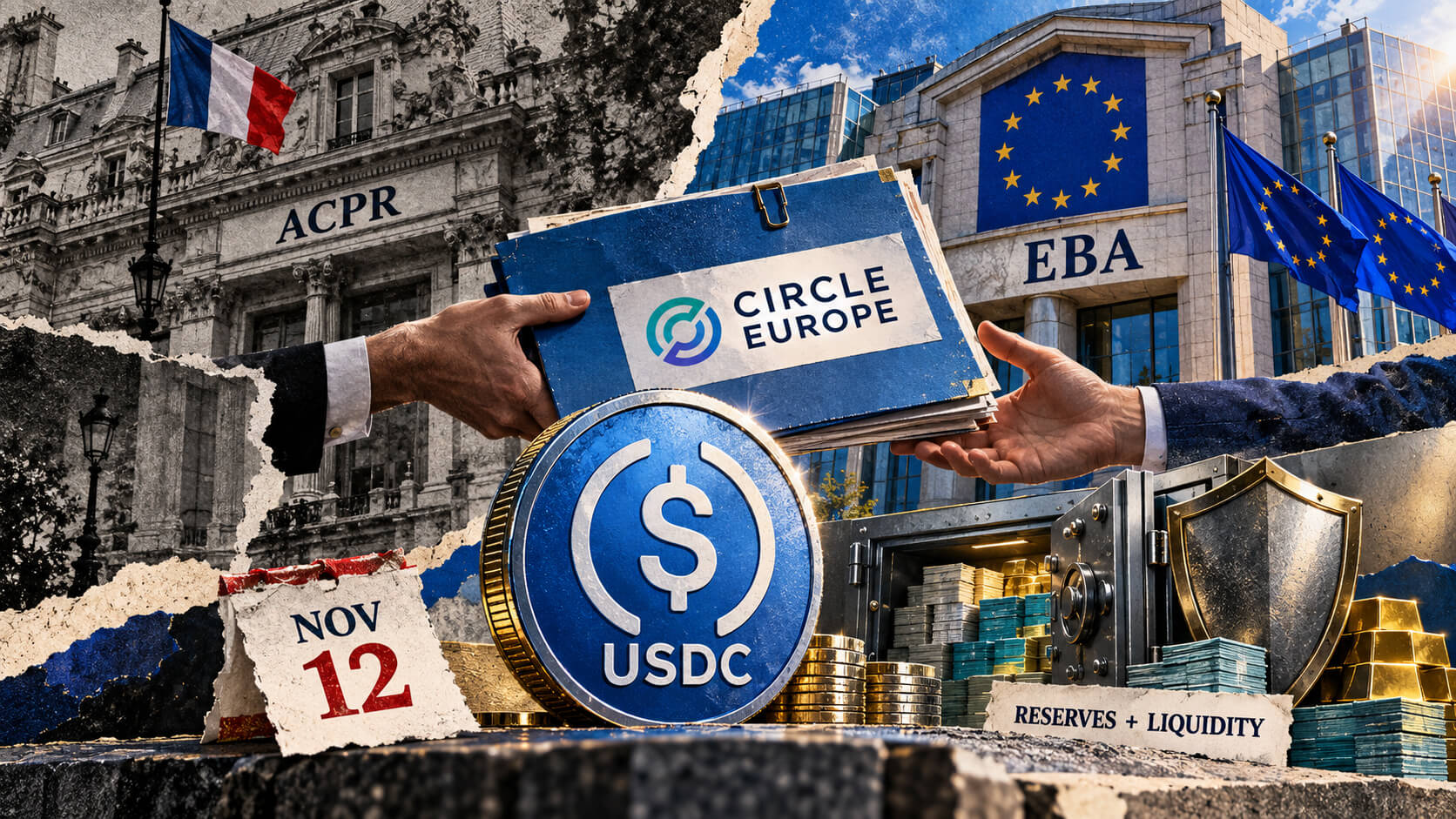
The European Banking Authority has officially designated EU-issued USDC as the first significant e-money token under MiCA, initiating a supervisory transition that takes effect on November 12, 2026. The designation elevates USDC's regulatory treatment from standard EMT supervision at the national level to direct EBA oversight—a milestone that sets the precedent for how the EU will handle systemically relevant stablecoins going forward.
The supervisory division of responsibilities is precise. From November 12, the EBA directly oversees Circle Internet Financial Europe SAS on capital requirements, reserve asset composition, liquidity standards, and recovery and redemption planning. France's banking regulator ACPR retains responsibility for governance oversight, including fit-and-proper assessments for key executives and conflict-of-interest monitoring. The dual-regulator structure reflects MiCA's design: the EBA holds the macro-prudential levers while national competent authorities maintain firm-level governance accountability.
The reserve requirement implications are material. MiCA mandates that standard EMT issuers maintain at least 30% of exchanged funds in separate bank deposit accounts. Issuers designated as significant face a 60% threshold—a standard that Circle will now need to comply with. In its consultation response to the EBA filed in early October, Circle argued that mandatory bank-deposit minimums concentrate issuer risk in the banking sector itself, potentially transmitting banking stress into the stablecoin ecosystem. The EBA has not yet published its final position on this argument.
Circle's global reserve architecture adds operational complexity. The company maintains separate USDC issuing entities for EEA and non-EEA holders, with distinct reserve portfolios backing each. Despite functional fungibility at the token level, the legal and regulatory separation is real. Circle has requested formalised safeguards permitting dynamic reserve rebalancing between jurisdictions—a flexibility that would help manage liquidity under stress scenarios but requires regulatory sign-off on both sides of the Atlantic.
The EBA has also signed a memorandum of understanding with New York's Department of Financial Services, establishing a cross-border information-sharing framework for stablecoin oversight. For European businesses building on USDC as settlement infrastructure, the November 12 transition is a live test of whether MiCA's significant-EMT framework adds regulatory predictability or introduces new operational friction.
Keywords: EBA, USDC, MiCA, stablecoin regulation, e-money token
Source: cryptoslate.com